Your bag

Behind PREF*RE
Can you turn a commodity into an icon?

We’re trying to make something people actually care about.
I think about commodities more than a normal person probably should.
Not wheat or oil or whatever CNBC is talking about before I’ve had coffee. I mean the everyday stuff. The things we buy without thinking. The things that exist in drawers, backpacks, glove boxes, junk bins, sideline bags, ski jackets, and that one weird closet where your family keeps batteries, tape, and expired sunscreen. The one you hope your kids don’t open while company is over.
Objects with a job.
Objects with almost no identity.
Objects that work, but don’t really mean anything.
In some ways, that’s where PREFIRE started for me.
Not with a detailed five-year product roadmap or some immaculate founder origin story involving a whiteboard and a perfectly timed market insight. It was much less elegant than that. It was basically me noticing that esports players were using hand warmers, and then asking a question that probably sounded insane the first time it came out of my mouth:
Could a hand warmer be cool?
Not “can we sell hand warmers?”
That’s the boring question.
The better question was: could you take this totally overlooked, almost invisible object and make people actually notice it? Could you make it feel designed? Could you make it feel like culture? Could you make someone want to leave it on a desk, hold it on stream, throw it in a bag, talk about it, maybe even choose it the way they choose a water bottle, a lighter, a notebook, a hat, a keyboard, a golf ball, or any other small object that somehow becomes part of how they move through the world?
That was the thought that wouldn’t leave.
And once a thought like that gets in, it is very annoying. It starts following you around. You see hand warmers everywhere. You see them in pro player hands. You see them in ski bags. You see them at cold soccer fields. You see them in your own coat pockets. You start wondering why every single one looks like it came from the same sad beige industrial drawer. You start wondering why a product that delivers literal warmth has almost no warmth as a brand.
The Commodity Problem
Hand warmers are not broken.
That’s important to say.
This was never about inventing fire. Humans already handled that one. Pretty big moment for the species. Respect.
Air-activated hand warmers already worked. You open them, oxygen gets in, iron oxidizes, heat appears, and for several hours you get this tiny controlled miracle in your pocket. Simple ingredients. Real utility. A genuinely useful product.
The problem was not function.
The problem was meaning.
Most hand warmers lived in the world as pure utility. They were designed to disappear. Designed to be hidden in gloves. Hidden in coat pockets and never thought of again. Hidden inside packaging that basically whispered, “Please do not look directly at me.” And for a long time that made sense. The category did not need taste. It served a functional benefit and everything else was deemed unnecessary.
But I’ve spent most of my career believing that design can change how people value things. Before PREFIRE, I spent years in agency life building brands, websites, campaigns, interfaces, decks, stories, and all the other strange ways companies explain themselves to the world. My first company, Playground, started in 2009 with my best friends and a truly heroic amount of optimism. We built it through the recession, worked with great clients, won some shiny internet trophies, sold the business, and learned a lot of things the hard way.
One of those things was this: people rarely fall in love with function alone.
They fall in love with function that has been given form, language, feeling, and point of view.
Water is a commodity until it becomes Evian, VOSS, Liquid Death, or the bottle someone actually wants on the table. Coolers are commodities until YETI makes them into a signal. Socks are commodities until Stance turns them into expression. Lip balm, hot sauce, coffee, notebooks, tote bags, protein powder, canned water, sparkling water, sunscreen, matcha, olive oil, salt — there are whole categories where the thing itself existed forever, and then one brand came along and made people look again.
That was the question with hand warmers.
Not can we make heat?
Can we make people care?
The Bright Yellow Thing
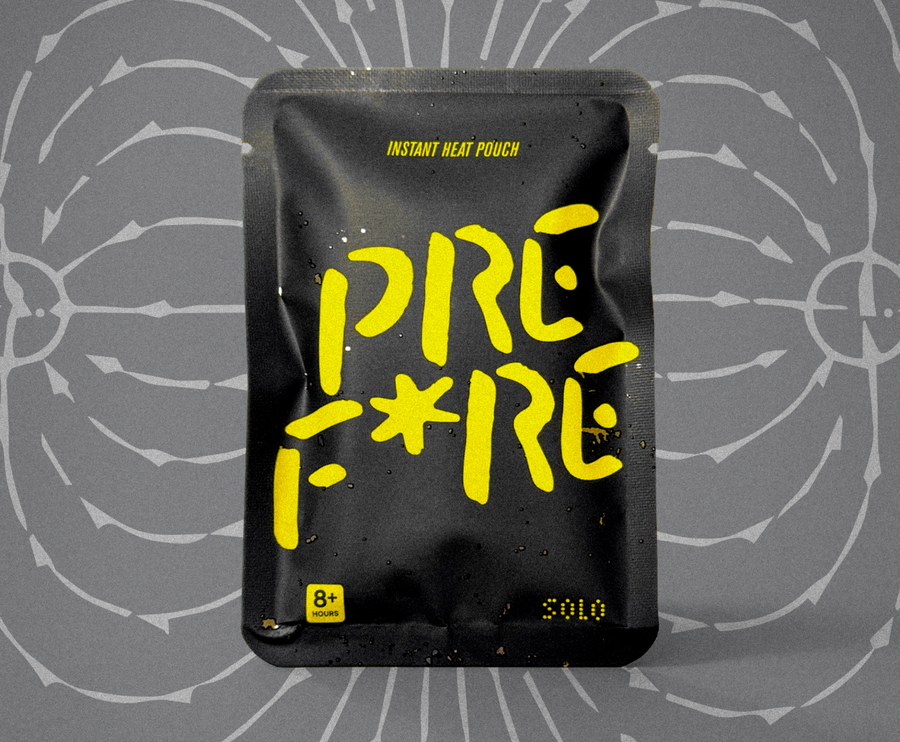
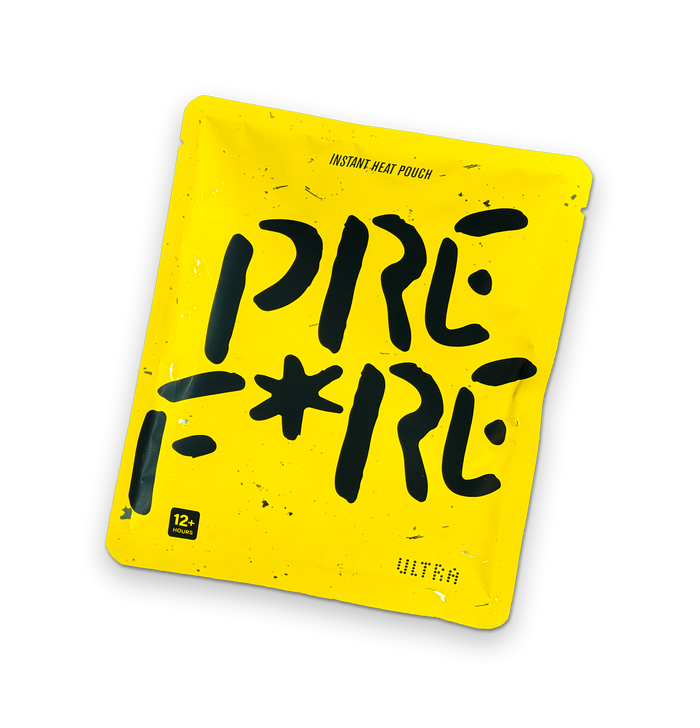
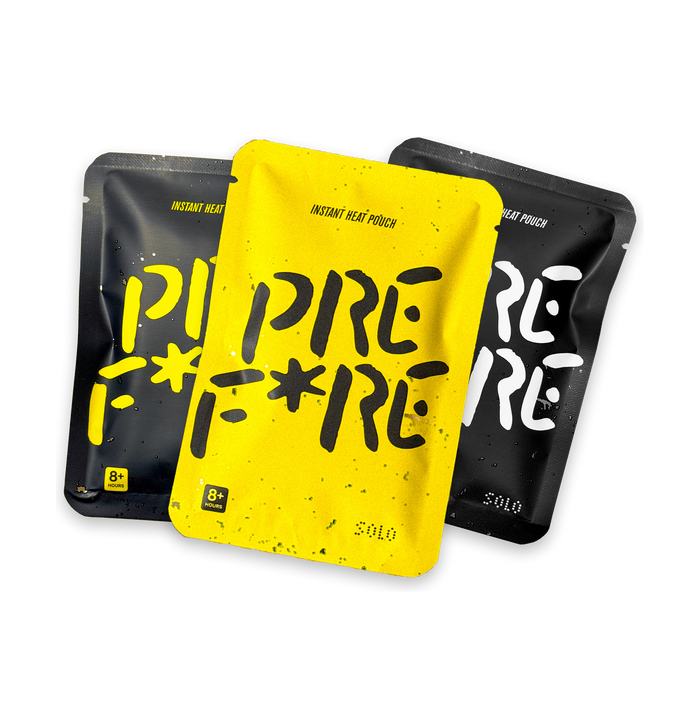
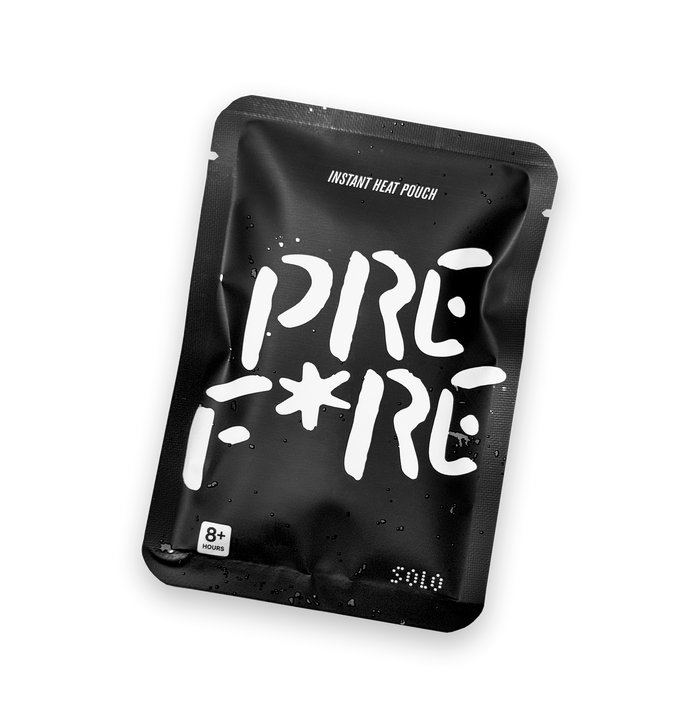
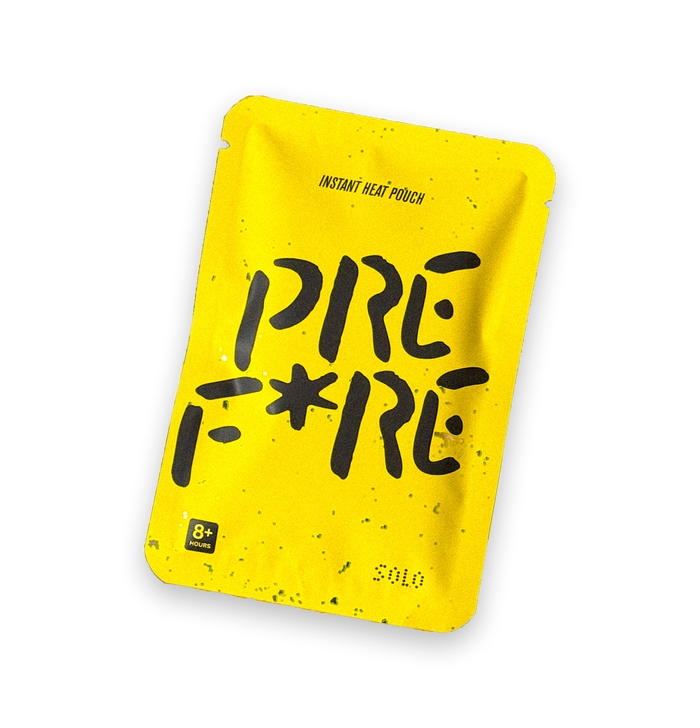
Most hand warmers are beige, white, orange, maybe vaguely medical-looking. They are designed like the inside of a cardboard box. We wanted the opposite. We wanted something that could be recognized instantly. Something that looked good on a desk next to a keyboard. Something you could see from across a room. Something that had the confidence of an object that knew it existed.
Yellow did a lot of work.
It felt like heat without using flames. It felt like caution, energy, visibility, signal, sport, safety, optimism, and mischief. It was loud but simple. It made the product easier to spot and harder to ignore. It also immediately created a tiny brand asset that could carry the whole idea.
A yellow pouch.
A small rectangle.
That became the object.
And this is where I think about Virgil Abloh’s 3% rule a lot. The idea that you can change something just enough to make people see it differently. Not reinvent the object from scratch. Not add a screen. Not make it Bluetooth. Please God, not everything needs Bluetooth. Just change the angle. Change the framing. Change the meaning. Move the object three percent and suddenly it has a new life.
That was PREFIRE.
A hand warmer, but seen.
A utility object, but with taste.
A small thing, but not a throwaway thought.
The Unsexy Part Nobody Sees
Of course, the romantic version of this story is that we had a sharp idea, made it yellow, launched the brand, and everyone clapped.
That is not what happened.
The actual version involves samples, suppliers, shipping quotes, legal language, packaging dimensions, insurance questions, duties, HS codes, minimum order quantities, Alibaba rabbit holes, translation gaps, late-night spreadsheets, and me asking questions so basic I could feel my ancestors looking away.
There is nothing like moving from services into physical products to remind you that atoms are rude.
Pixels will let you change your mind at 11:58 p.m.
Inventory will not.
A website can be updated.
A box with the wrong thing printed on it becomes a small monument to your decision-making.
A brand deck can say “premium, iconic, culture-led warmth object” all it wants, but eventually someone asks how many pouches fit in a carton, what the outer case dimensions are, whether the product has liability insurance, and if the warning label says the right thing.
That’s the part I actually like, even if it regularly tries to kill me.
Because building PREFIRE has been this constant collision between the poetic and the practical. One minute you’re talking about warmth as ritual, calm, focus, blood flow, and the emotional texture of preparation. The next minute you’re trying to understand brokerage fees and whether a stadium partner needs an updated certificate of insurance before they’ll let your little yellow heat rectangle anywhere near their fans.
That tension is the business.
Brand in the clouds.
Operations in the mud.
Why Esports Made It Click
The first place PREFIRE really made emotional sense to me was gaming.
I grew up playing Counter-Strike before Steam made everything feel official. I played tactical shooters, hung around LAN cafés, followed the competitive scene, and later got pulled into esports more as a viewer when life, kids, and the general collapse of free time made grinding ranked less realistic. I still loved the culture. The rituals. The setups. The obsession with small details.
Then I noticed something I couldn’t unsee.
Players were using hand warmers.
On stage. Backstage. During warmups. Between maps. Before matches.
And once you understand gaming, this makes perfect sense. Competitive play may happen on a screen, but the performance is still physical. Hands matter. State matters. Warm-up matters. A player holding a hand warmer before a match is not just “using a product.” They’re getting into state.
That felt much bigger than the category was giving it credit for.
Here was this humble object already living inside performance culture, but nobody had really built a brand around that meaning. Nobody had made the product feel like it belonged to the moment. Nobody had treated the hand warmer as part of the ritual.
That was the opening.
And not in the gross way where you invent a fake problem and then sell the solution. This was already happening. We were just paying attention.
That is usually where the best brand opportunities hide.
Not in forcing culture.
In noticing what culture is already doing and then giving it a sharper object, better language, and a clearer identity.
The Dangerous Word: Icon
Calling anything an icon before it is one is ridiculous.
I know this.
You can’t self-declare icon status. That’s like giving yourself a nickname. If you have to keep reminding everyone, it’s not happening.
But “icon” can still be useful as an ambition.
It gives you a standard.
An icon is recognizable. It has restraint. It has memory. It can be drawn by a child. It carries meaning beyond function. It becomes shorthand.
That’s why the yellow pouch mattered.
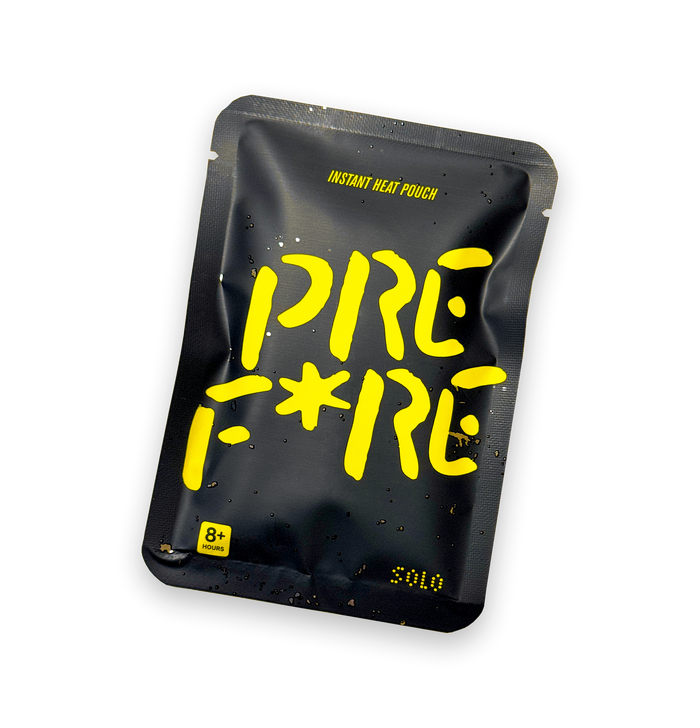
If PREFIRE was ever going to become more than another hand warmer, it needed a visual signature simple enough to survive. Bright yellow. Black type. Minimal. Confident. No snowflakes. No “brrr.” No cartoon flames doing jazz hands. No copy that sounds like a discount ski glove insert wrote it.
The category already had enough of that.
We wanted something sharper.
A little more fashion. A little more sport. A little more design object. A little more “why does that hand warmer look better than my bank app?”
That was the bar.
And we are still trying to reach it every day.
Some days better than others.
The Part Where Reality Punches The Mood Board
The thing about building a brand around a commodity is that the world will constantly try to drag you back into commodity thinking.
Retailers ask about margins. Customers ask about price per pouch. Partners ask about case packs. Ads ask for conversion. Shipping costs show up like an uninvited raccoon in the garage. You can have the most beautiful philosophy in the world and still need to figure out why your Shopify product page is not indexing properly.
This is where the romantic branding conversation gets tested.
Do you still care about the idea when the Meta ad is underperforming?
Do you still care about the pouch when a customs invoice makes you question every life choice since high school?
Do you still care about the mission when you are writing yet another outreach message to a creator who may never reply?
That is the real work.
Not the launch moment.
The repetition.
The unglamorous follow-through.
The bumps and bruises.
The part where you keep choosing the idea even when it is inconvenient.
That, more than anything, is probably what turns a commodity into something else.
Not taste alone.
Commitment.
What The Product Actually Promises
For all the philosophy, PREFIRE still has to work.
That is the deal.
It is an air-activated hand warmer that delivers 8+ hours of consistent heat. Each pouch contains simple ingredients like iron powder, water, salt, activated charcoal, and vermiculite. You rip it open, shake it well, and warmth builds over time.
That has to be true.
Because brand can create desire, but product has to earn trust.
And in this category, trust is tactile. You feel it. You either get warmth when you need it or you don’t. The pouch either feels good in your hand or it doesn’t. It either becomes something you reach for again or it disappears into the pile of things you tried once.
That’s humbling.
But it is also clarifying.
The object is simple enough that you cannot hide behind complexity.
Good.
I like that.
So Can A Commodity Become An Icon?
I think yes.
But not by pretending it was never a commodity.
That’s the mistake.
You don’t escape the category by denying the function. You escape by honoring the function so deeply that you uncover a new layer of meaning inside it.
A hand warmer provides heat.
True.
But heat can mean comfort. Warm-up. Focus. Calm. Preparedness. Relief. Circulation. A sideline parent getting through one more cold match. A gamer settling hands before queueing. A skier staying out for one more run. Someone who runs cold feeling a little more at home in their body.
That is not just utility.
That is a lot of human life hiding inside a small object.
Maybe that’s where icons come from.
Not from making something bigger than it is.
From seeing how big it already was.
Where We Are Now
We are still early.
Painfully early in some ways.
The kind of early where you are building the brand, improving the site, writing the SEO articles, fixing the product pages, reaching out to teams, shipping samples, asking for feedback, testing ads, learning retail, learning logistics, learning winter seasonality, and occasionally wondering if you have accidentally built a very expensive personal growth exercise disguised as a hand warmer company.
But I believe in it more now than when we started.
Because the more we work on PREFIRE, the more I see that the product has range.
Esports. Hiking. Skiing. Camping. Sidelines. Commuting. Emergency kits. People who run cold. People who want a small ritual before the thing. People who understand that warmth is not nothing.
The category was never small.
It was under-imagined.
That is a very different thing.
And that is where we want to play.
A Small Yellow Bet
At the end of the day, PREFIRE is a small yellow bet.
A bet that useful things can be beautiful.
A bet that simple products can carry meaning.
A bet that warmth deserves better design, better language, and a little more cultural respect.
A bet that a hand warmer can be something people actually care about.
Maybe that sounds ridiculous.
It probably is, a little.
Most good ideas are at least slightly ridiculous before they work.
That’s part of the fun.
And honestly, after years of building brands for other people, there is something deeply satisfying about taking the smallest, humblest, most overlooked object and saying: what if we gave this everything we’ve learned?
What if we treated it like it mattered?
What if we made the warm thing cool?
That’s PREFIRE.
For now.
And hopefully for a long time.