Your bag

Guides
How long do hand warmers last?

The complete guide to heat duration, peak warmth, and what actually determines how long a hand warmer stays warm.
If you search “how long do hand warmers last,” most articles give you the same thin answer: six to ten hours, maybe up to twelve, depending on the brand. Technically that’s not wrong. It’s just incomplete.
Because when someone asks how long a hand warmer lasts, they usually aren’t looking for a number on packaging. They want to know when it starts heating up, how long it stays meaningfully warm, why some seem to fade faster than others, and whether there is actually a difference between brands or if they’re all the same. That’s a much more interesting question.
The truth is, hand warmer duration is less like a stopwatch and more like a heat curve. There’s an activation period, a peak, a long stretch of sustained warmth, and then a gradual decline. Understanding that arc tells you far more than an “8-hour” claim ever could.
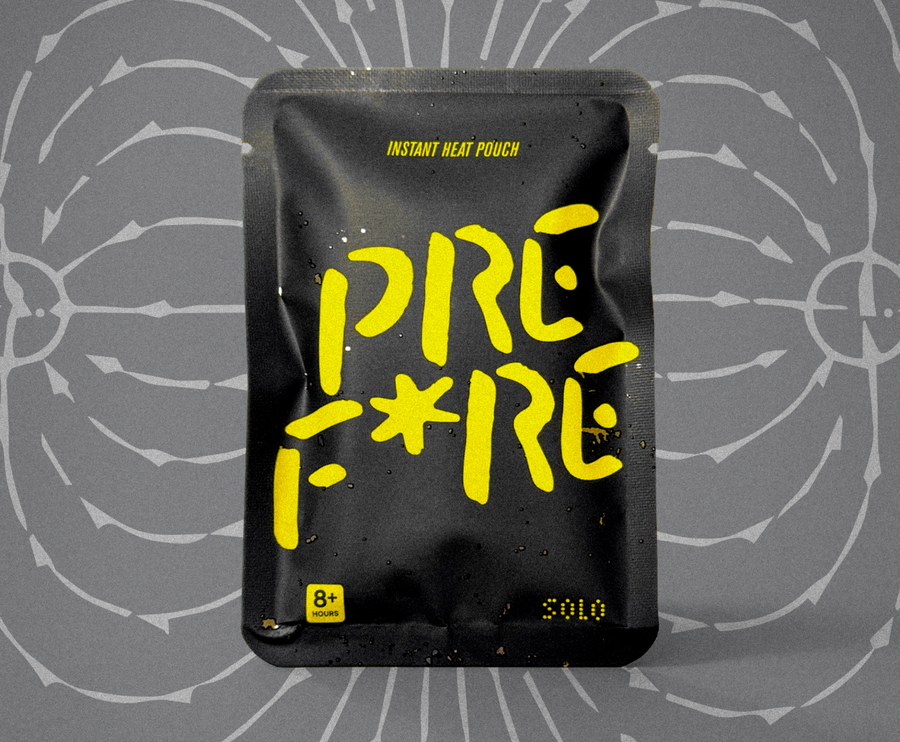
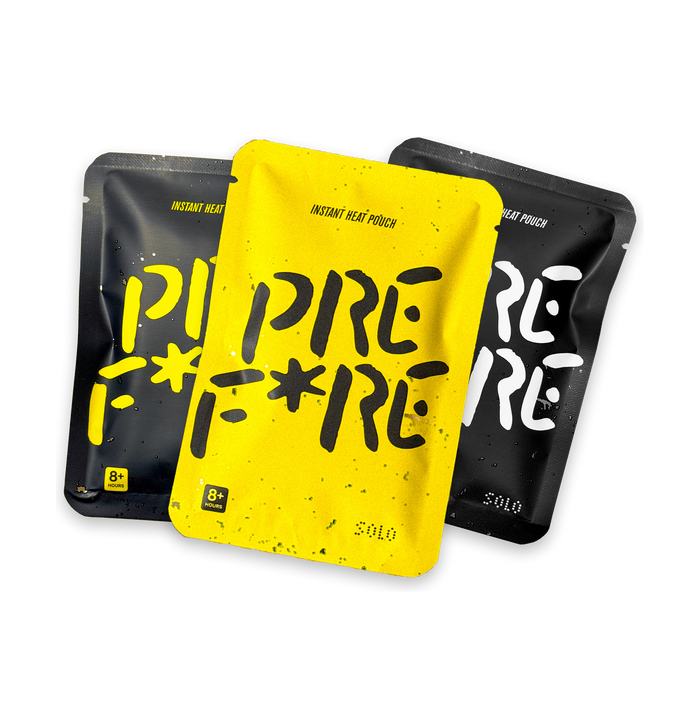
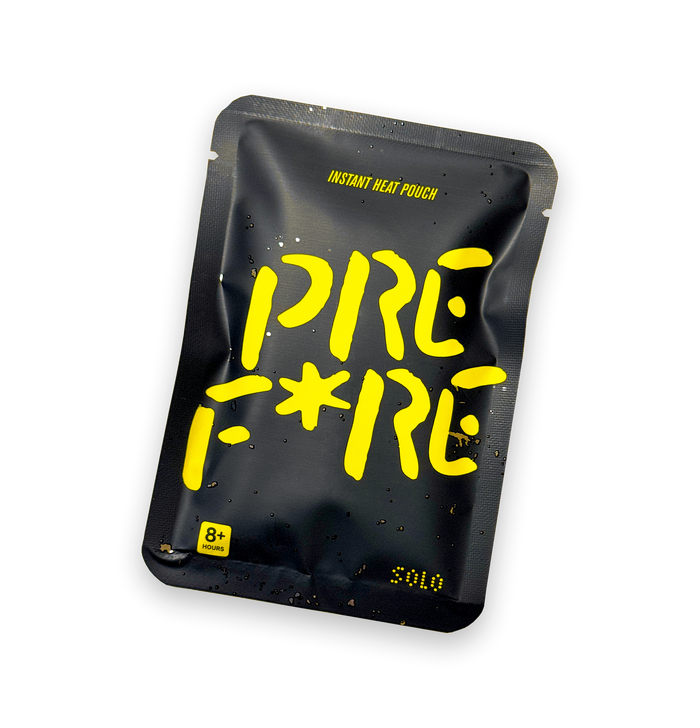
Most disposable air-activated hand warmers last somewhere between 6 and 12 hours. Quality options like PREFIRE are designed to deliver 8+ hours of consistent heat, while larger-format warmers like PREFIRE ULTRA can extend beyond that. But even that only tells part of the story, because not all warmth is created equal. A product that burns very hot for two hours and fades unpredictably can feel far less effective than one that delivers gentler but steady warmth all day.
That distinction matters because, in practice consistency often feels warmer than intensity.
What “Lasting” Actually Means
One of the biggest misconceptions in the category is that a hand warmer operates at a flat temperature until it suddenly shuts off. That isn’t how they work.
Air-activated hand warmers move through stages. After opening the pouch and exposing the contents to oxygen, the reaction begins and heat gradually builds. Most warmers take several minutes, sometimes longer, to fully come alive. From there they move into a peak heat period, usually in the early portion of their life, before settling into what is often the most useful part of the experience: sustained, even warmth.
That middle stretch is where quality really shows.
This is also why people report wildly different experiences using the same product. One person may judge duration by how long it stays “hot hot.” Another may count every hour it provides useful comfort. Both can be right.
When we talk about hand warmers lasting eight hours or more, we’re talking about usable warmth over the arc of the reaction, not a fixed maximum temperature held like a machine.
How Hand Warmers Generate Heat
The warmth comes from a simple but elegant bit of chemistry.
Most disposable hand warmers contain a mixture of iron powder, water, salt, activated charcoal, and vermiculite. Once the pouch is opened and oxygen enters, the iron begins oxidizing. That oxidation produces heat.
Salt helps accelerate the reaction. Activated charcoal helps distribute warmth. Vermiculite helps retain it.
That’s it.
No batteries. No charging. Just controlled oxidation.
Because the reaction depends on oxygen, temperature, ingredient balance, and how much reactive material is in the pouch, those factors all influence duration.
Which leads to one of the most overlooked truths in the category.
Why Some Hand Warmers Last Longer Than Others
People often assume a longer-lasting hand warmer is purely the result of a secret formula.
In reality, duration is heavily tied to material volume.
There is a simple physical reality at play: more reactive material generally means more available heat energy.
That was something we thought a lot about while developing PREFIRE.
Early on, one of the questions we kept asking was: could we make a hand warmer last longer?
The answer is yes, but only to a point through formulation alone. At some stage, if you want more total heat, a higher maximum output, and a longer duration curve, you need a larger pouch capable of holding more material.
That is a big part of why larger-format hand warmers exist.
PREFIRE ULTRA is not just a scaled-up version of the same product for the sake of variety. It exists because larger heat mass can support greater warmth and a longer performance arc.
Sometimes the answer to longer-lasting warmth is not altering the chemistry.
It is giving the chemistry more room to work.
Why Conditions Change Performance
The environment matters more than many people realize.
A hand warmer sitting exposed in open freezing wind will often behave differently than one tucked into gloves or inside a coat pocket. That doesn’t necessarily mean one is producing more heat than the other, but insulation changes how efficiently that warmth is retained and perceived.
That’s why hand warmers often seem to last longer when used in real-world ways they were designed for.
Temperature matters too. A hand warmer fighting deep winter conditions may feel less intense than one used on a mild chilly day, even if the underlying heat output is similar.
And then there’s quality.
Not all hand warmers are made equally. Ingredient ratios, fill quantity, pouch construction, oxygen permeability, and manufacturing consistency all play a role. Some cheaper products spike quickly and burn out fast. Better ones tend to produce a smoother, steadier curve.
That difference may not show up in an “up to 8 hours” claim.
But you feel it.
Yes, Hand Warmers Are Rigorously Tested
One of the things many consumers don’t see is how much testing sits behind those duration claims.
Quality hand warmers are typically evaluated in controlled environments designed to map heat output over time. That can include temperature-controlled rooms, insulated simulations, thermal monitoring under blankets or contained conditions, open-air exposure testing, and repeated sampling across multiple production runs.
The goal is not simply to confirm a warmer gets warm.
It is to understand the entire temperature arc.
How quickly does it activate?
Where does it peak?
How stable is the plateau?
When does decline begin?
How does it behave in simulated use conditions?
That curve matters.
Because a good hand warmer isn’t just one that gets hot.
It is one that delivers warmth in a way that feels reliable.
That distinction is subtle, but it’s everything.
How Long Different Types of Hand Warmers Last
When people compare hand warmers, they often mix very different technologies together.
Air-activated hand warmers, the kind most people use for hiking, sports, commuting, camping, and everyday cold, generally last the longest in terms of sustained passive warmth. Most fall in the 6 to 12 hour range, with some larger models extending further.
Rechargeable electric hand warmers often run between two and eight hours depending on battery size and heat setting. They can be fantastic, but runtime often drops significantly at higher settings.
Reusable sodium acetate snap packs are great for quick bursts of warmth, but typically last under an hour.
Fuel-based catalytic warmers can run for very long periods, though they tend to sit in a more niche outdoor category.
Each has a place.
But for long-duration simple warmth, air-activated still has a strong case.
How To Make Hand Warmers Last Longer
There are also practical ways to get better performance from any hand warmer.
First, give it time to fully activate. People often judge a warmer too early. Let the chemistry do its thing.
Second, use it in insulated environments like gloves or pockets whenever possible. Warmth retention matters.
Third, choose the right warmer for the use case. A standard pouch for a quick walk is different than what you might want for a ski day or long outdoor tournament.
Sometimes the best way to make a hand warmer last longer is simply using a larger warmer built for longer duration.
That sounds obvious.
But it’s often the right answer.
Can You Pause a Hand Warmer?
People ask this all the time.
Can you put it in a zip bag and save it for later?
Reducing oxygen exposure may slow the reaction somewhat, but once oxidation is underway it isn’t something you can truly stop and restart.
Think of it more as slowing the burn than pausing the clock.
Why Some Hand Warmers Seem To Die Early
In many cases they haven’t actually failed.
Sometimes they never fully activated.
Sometimes people expected peak heat for the full duration.
Sometimes the conditions overwhelmed perception.
And sometimes the warmer was simply undersized for the mission.
That last point matters.
A smaller pouch being asked to perform through a full winter day outdoors may not be the right tool.
That is not always a product problem.
Sometimes it’s just a mismatch.
So How Long Do Hand Warmers Last?
The honest answer remains:
Most quality air-activated hand warmers last 6 to 12 hours.
PREFIRE delivers 8+ hours of consistent heat, while larger-format warmers like ULTRA can extend duration further through greater heat mass.
But the more useful answer is that duration is only part of performance.
What really matters is the shape of warmth over time.
How quickly it comes on.
How steadily it holds.
How long it remains genuinely comforting.
That is what people actually experience.
And that is what makes one hand warmer feel better than another.
A Different Way To Think About Warmth
At PREFIRE, we’ve always liked the idea that hand warmers deserve to be thought about with a little more care.
Not just as cold-weather utility.
But as objects of comfort.
Ritual.
Preparedness.
Focus.
That may sound lofty for something small and simple.
But anyone who has reached for warmth at the right moment understands it.
Sometimes a hand warmer is just a hand warmer.
Sometimes it’s the thing that makes the next eight hours better.
And that feels worth designing for.